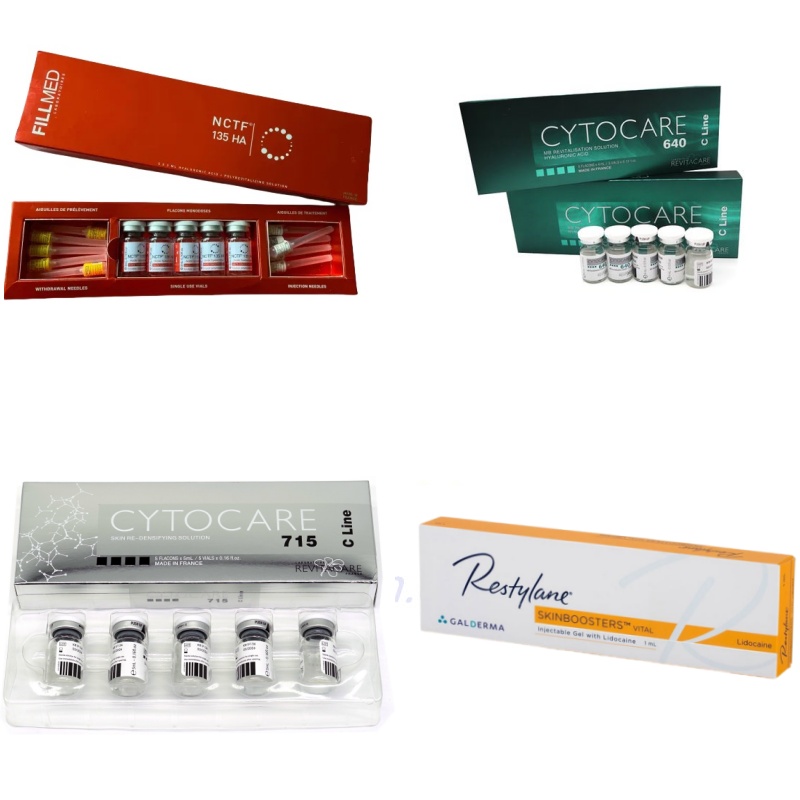
What is meso solution?
A meso injection is essentially an injectable skincare treatment. Using a specialized instrument called a "hydrating gun," the desired cosmetic injection is injected into the dermis, just below the epidermis. The injection leaves the skin hydrated and radiant, hence its name.
What are the benefits of a meso injection?
1. Hydrating. One gram of hyaluronic acid is equivalent to one liter of water. A hydrating injection delivers hyaluronic acid deep into the skin, resulting in excellent hydration and long-lasting moisturizing effects, leaving skin hydrated and radiant.
2. Improves skin tone. A hydrating injection stimulates the skin's metabolism, rapidly removing melanin from the body, improving dull, dry skin and brightening the complexion for a radiant, brighter complexion.
3. Shrinks pores. A hydrating injection utilizes mesotherapy, which stimulates the skin's metabolism and reduces and refines pores, resulting in a firmer, smoother complexion.
4. Reduces wrinkles. Hyaluronic acid injections are very effective for wrinkle reduction. One gram of hyaluronic acid is equivalent to 16 times the amount of collagen, plumping up sagging skin, smoothing fine lines, crow's feet, and wrinkles, while also tightening the skin.
What are the contraindications for hyaluronic acid injections?
1. If you have had any facial plastic surgery or laser surgery within the past six months, or if you have had any medical implants, please inform your doctor in advance. Examples include rhinoplasty and photoelectric lasers.
2. If you have multiple severe allergies or acne, pimples, or wounds in the treatment area, avoid hyaluronic acid injections.
3. Those prone to scarring should not undergo hyaluronic acid injections.
4. People with serious medical conditions, such as heart, liver, lung, kidney, or brain diseases, should not receive hyaluronic acid injections.
5. Women should avoid hyaluronic acid injections during menstruation, pregnancy, or breastfeeding.
What does hyaluronic acid injection do?
There are a wide variety of injectable medications available on the market, but they're primarily based on small-molecule hyaluronic acid, which intensively hydrates the skin, forming a water barrier in the dermis to help lock in moisture. Furthermore, within this foundational base, many other ingredients can be added: single ingredients like vitamin C, glutathione, and botulinum toxin, as well as various complex nutrients (kinetic energy), achieving a 1+1 greater than 2 effect. Different medications, different prices, and even more varied results!
Can you achieve natural skin with just one injection?
In reality, you won't see immediate results after a hydrating injection; it usually takes about a week. The reasons are: ① There's initial inflammation, which can cause some swelling; ② It takes time for the injection to absorb. Achieving "natural skin" with just one hydrating injection may not be possible. Typically, hydrating injections are administered on a course of treatment: monthly for the first three months, and then every three months thereafter. Optimize your skin's appearance by administering a course of treatment tailored to your facial condition. Regular hydrating injections are essential to maintaining optimal skin condition.
Will meso injections cause addiction?
No. Hyaluronic acid injections are like skincare products. If you don't use skincare products for six months, your skin will definitely deteriorate. The same is true for hydration injections. If you don't use them for a long time, your skin won't be as good as it was after the injections, but it won't deteriorate.
Post-Injection Precautions
1. Avoid getting your face wet for 24 hours after the procedure. If the injection site is noticeable or redness, swelling, or pain occurs, apply topical growth factor or Bactroban ointment.
2. After the procedure, keep the treated area clean. Avoid excessive massage or kneading. Avoid hot, humid environments and prolonged exposure to the sun.
3. Apply a hydrating mask frequently within seven days. Hyaluronic acid can absorb 500 times its own water content. If you don't hydrate regularly, your skin will feel dry.
4. Avoid alcohol, smoking, or spicy foods for one week after the hydration injection.
5. Do not use ointments, skincare products, or makeup on the treated area after the procedure. Avoid touching the treated area with your hands to reduce the risk of infection.